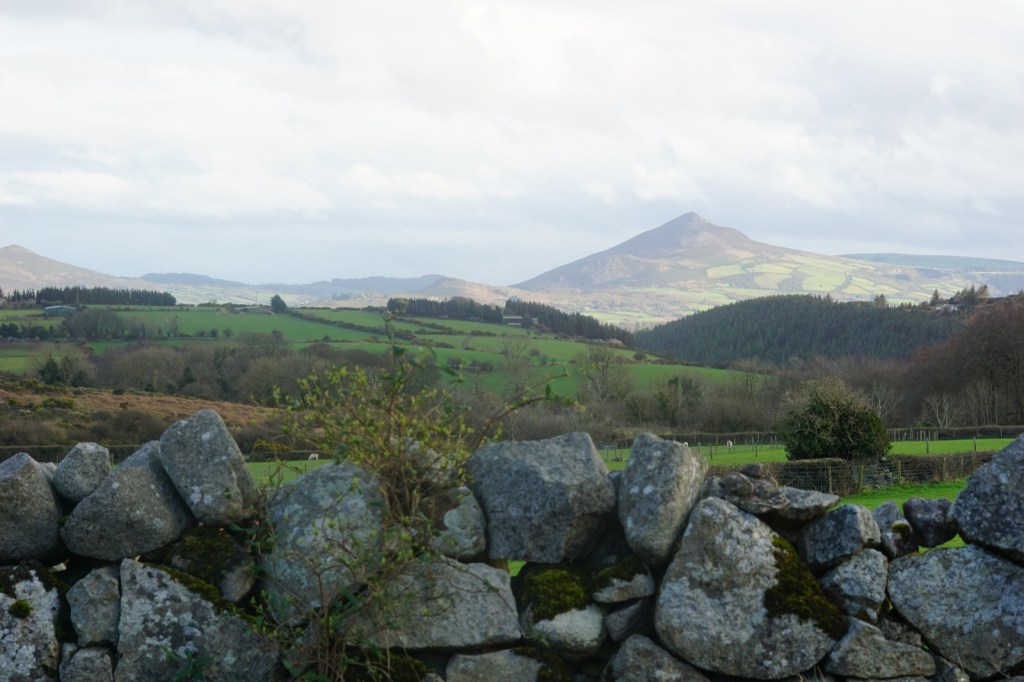
Glencullen, (Gleann Cuileann), the Valley of the Holly.
INTRODUCTION AND HISTORY
At 900 feet, Glencullen is one of the highest villages in Ireland and boasts spectacular views south to the Sugar Loaf Mountain and east to the Irish sea with occasional views of the mountains of Wales on cold clear days.
The village stands at a crossroad, on one side there is the school, a Catholic church, a Carnegie Library, the Old School, the Old Church and graveyard and, of course, the world-renowned pub, Johnny Foxes. Other buildings of interest just beyond the crossroads are ‘The Dispensary’ and ‘Glencullen Barracks.’ Further along there is ‘Glencullen House’ which has a rich history associated with the Great Liberator ‘Daniel O’Connell’.
However, the history of the area reaches further back in time. Close to the crosswords in a field opposite Glencullen House there is a megalithic standing stone, known locally as ‘Queen Mab’ and it is believed that the stone marks the burial place of a member of a family or indeed a whole family. Other suggestions are that there were originally two standing stones used by Vikings to play a game of rings. The stone is made of quartz and is 1.8m tall and 92cm wide.
To the west of Newtown Mountain there is another Standing Stone. Beside this stone there is a burial mound, or tumulus, surrounded by a ditch. This may have been a megalithic burial chamber and probably dates from 1000-500 B.C. Newtown Mountain also boasts a Raithlin, a habitation site. It is possible that this circular ditch surrounded and secured a farm building.
Further up the mountain, there is what’s known locally as the ‘Giant’s Grave’. It is thought that this wedged shaped gallery grave dates back to about 1700 B.C. It’s a type of communal burial plot. The three compartments of the central chamber which house the burials are surrounded by a horse shoe shaped set of stones and covered by a cairn. When unearthed in 1947, pottery and many flint implements were found.
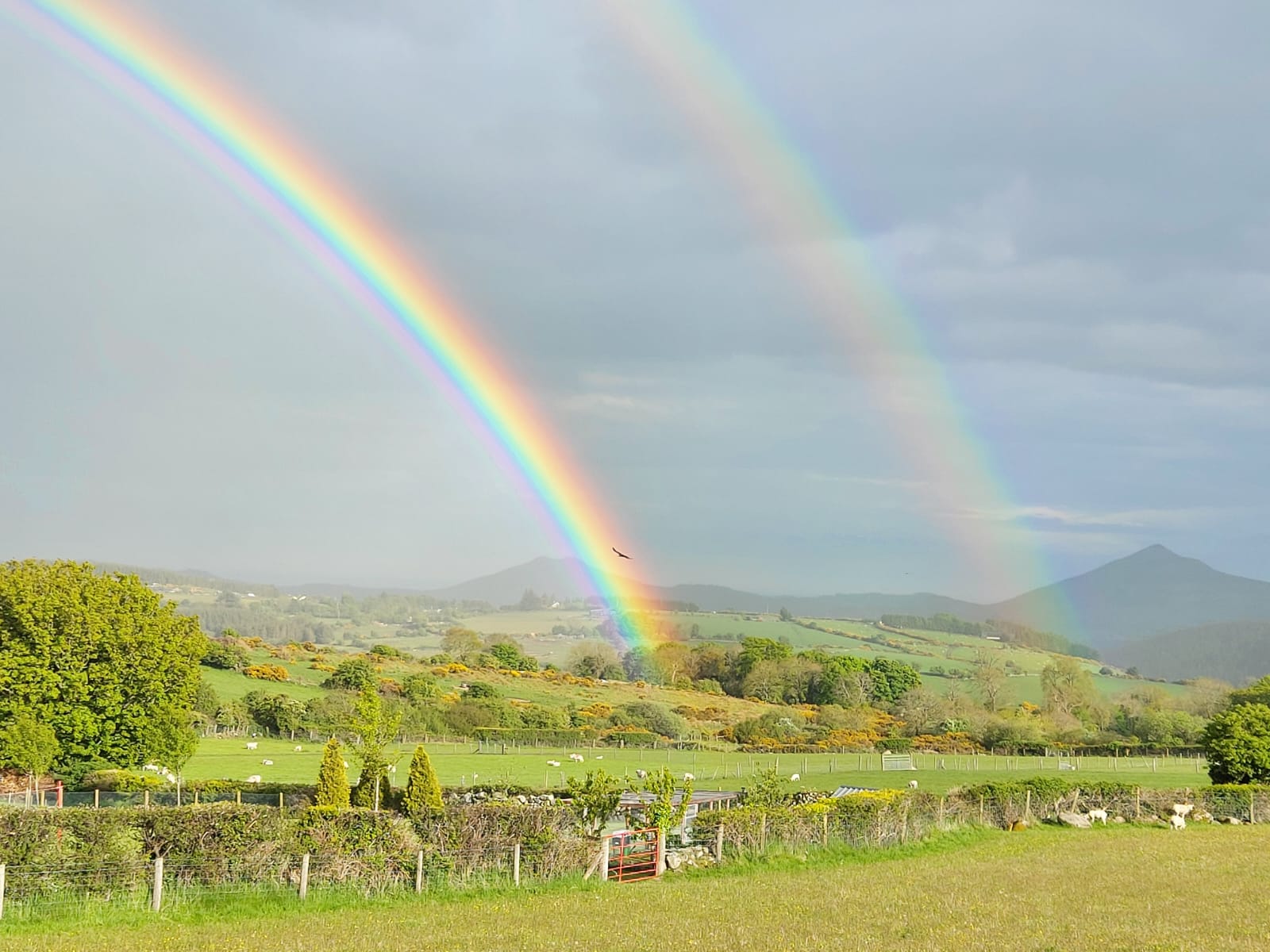
Glencullen is one of the highest villages in Ireland and boasts spectacular views south to the Sugar Loaf Mountain
 Glencullen Community Hall